

What Septic Tank Replacement Solves
Tank-only replacement focuses on the primary settling and treatment vessel. It may be appropriate when the drainfield remains usable but the tank itself cannot provide dependable containment or treatment. The scope can include pumping the old tank, excavation, an approved replacement tank, bedding, inlet and outlet connections, baffles or tees, risers, lids, inspection and final grading.
Replacement should be based on inspection findings rather than one symptom. Sewage odors, backups or slow drains can also result from a full tank, clogged inlet, damaged building sewer, blocked effluent filter, failed pump or drainfield problem. Locating the actual failure helps avoid replacing a sound tank while leaving the real problem unresolved.
The Kentucky Onsite Sewage Disposal Systems Program states that local health department inspectors perform onsite evaluations and inspections. It also states that a certified Kentucky onsite septic installer must install the system based on the evaluation results. These requirements help connect the replacement tank to an approvable system rather than treating it as a stand-alone excavation job.
When May a Septic Tank Need Replacement?

A septic tank may need replacement when its structure, capacity or configuration cannot be corrected with a durable repair. The decision should consider the whole system, because tank damage and drainfield failure can occur separately or at the same time.
A crack, hole or failed seam allows wastewater to escape or groundwater to enter the tank.
The tank is collapsing, deformed or unsafe to access around the lid or excavation area.
Severe concrete deterioration or corrosion has weakened walls, baffles or connection points.
The tank capacity does not match the approved design flow or current permitted property use.
Inlet or outlet damage is too extensive for a reliable component repair.
Inspection findings show that replacement is required to complete an approved system alteration.
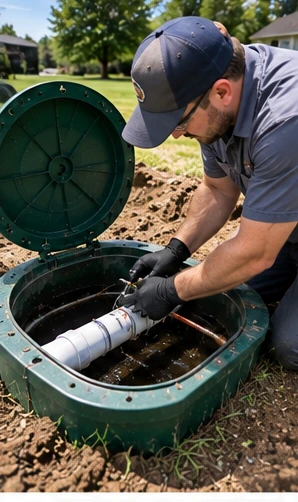
A broken lid, damaged riser, outlet tee or accessible baffle does not always require a new tank. Those components may sometimes be repaired separately when the tank body remains sound. Pumping and inspection provide the access needed to distinguish a repairable component from structural tank failure.
How We Handle Septic Tank Replacement

1. Confirm the Tank Condition and Records
We review the reported symptoms, known maintenance history, tank location and any available permit or inspection records. The tank and connected components are evaluated to confirm that replacement, rather than pumping or repair, is the appropriate scope.
2. Evaluate Size, Connections and Site Access
Tank capacity, inlet and outlet elevations, depth, material, vehicle access, utilities and the condition of downstream components affect the plan. The replacement must work with the approved system and property conditions.
3. Coordinate Required Approval
For Kenton County, the current Northern Kentucky Health septic guidance says repairs or alterations involve a certified installer, a repair site evaluation and a repair permit. The exact pathway depends on the property and proposed work.
4. Pump and Manage the Existing Tank
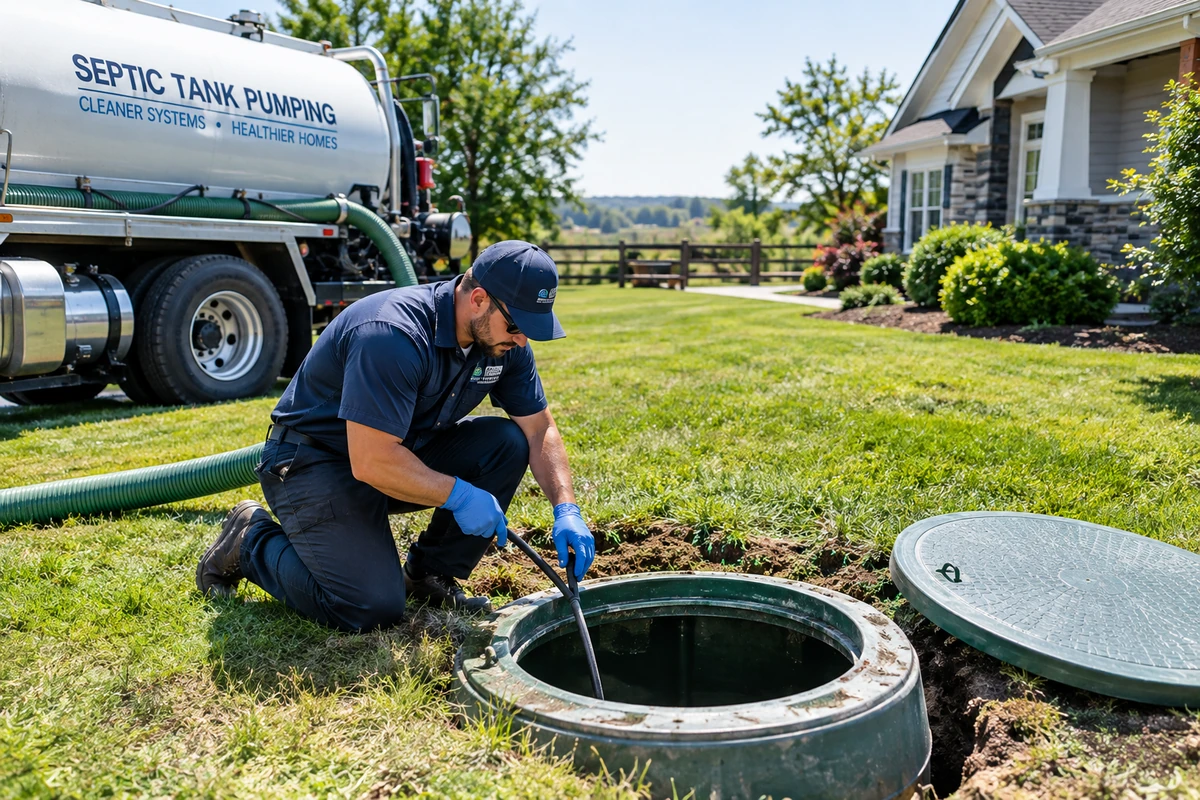
The tank is pumped as needed before excavation. The approved scope should state whether the old tank will be removed, abandoned in place or handled by another permitted method, along with how septage and debris will be managed.
5. Install and Connect the Replacement
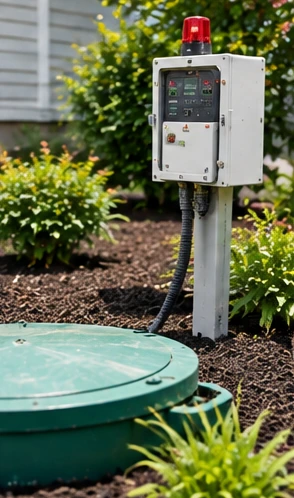
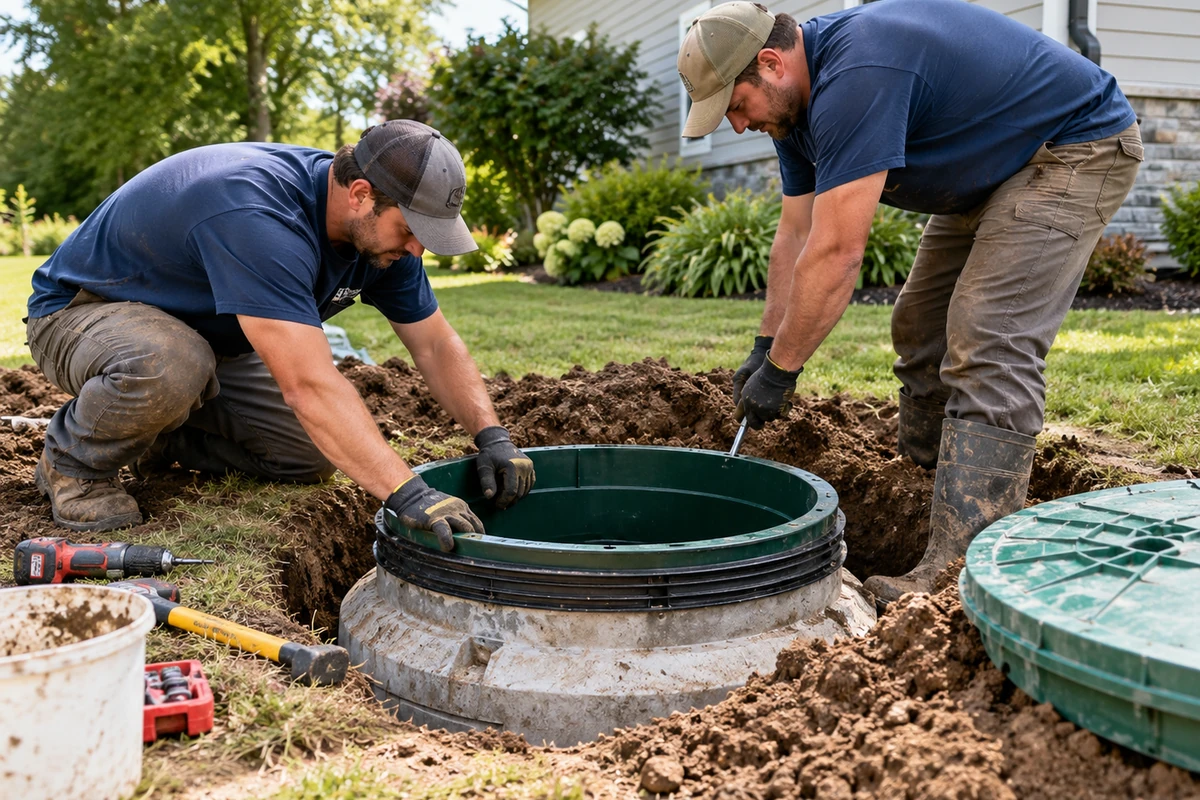
Excavation equipment is used to prepare stable bedding, place the approved tank and reconnect the inlet and outlet. Required baffles or tees, watertight connections, risers and secure lids are installed according to the approved plan.
6. Inspect, Backfill and Document
Required inspection occurs before covered work is concealed. After approval, the excavation is backfilled and graded within the agreed scope. The owner should retain the tank location, permit, inspection and service records for future maintenance.
What Affects Septic Tank Replacement Cost?
Cost depends on tank capacity and material, burial depth, access for excavation equipment, pumping needs, soil or groundwater conditions, inlet and outlet changes, risers and lids, permits, inspections, disposal, imported bedding and final restoration. Rock, tight yards, mature landscaping, driveways and nearby utilities can increase labor or equipment needs. A local price range should be published only when current provider quotes or completed Northern Kentucky jobs support it.
Related Replacement and Septic Services
For projects involving the tank, drainfield or a complete new system, see Septic System Installation & Replacement Covington.
When the soil-absorption area has failed, review Drainfield Replacement Covington.
Routine emptying and maintenance are covered under Septic Tank Pumping Covington KY.
Review Areas We Serve Near Covington for confirmed coverage across Covington, Kenton County and nearby Northern Kentucky communities.
Frequently Asked Questions
What happens to the old septic tank?
The approved abandonment, removal or replacement method depends on local requirements and site conditions. The project scope should state exactly how the old tank will be handled.
How much does septic tank replacement covington cost?
The cost of septic tank replacement covington depends on system size, access, depth, condition, travel, equipment, and any additional diagnosis or repair. Publish a local range only after it is supported by current provider quotes or completed jobs.
How does this page differ from Septic System Installation & Replacement Covington?
This child page owns tank-only replacement intent; the parent page covers the complete installation process.