

What a Septic System Inspection Covers
A septic system is more than a buried tank. Wastewater travels from the building through an inlet line, separates inside the tank and then moves through an outlet toward a distribution system and drainfield. Some systems also use an effluent filter, pump, float, alarm or alternative treatment unit. An inspection considers the parts that are present and accessible at the property.
We begin with the purpose of the inspection. A routine maintenance review focuses on pumping history, solids accumulation and observable component condition. A diagnostic inspection follows symptoms such as backups, odors or an alarm. A real-estate inspection documents conditions during a buyer's or seller's transaction period. Those purposes may require different access, measurements and reporting.
Depending on the agreed scope and system design, the inspection may include:
Available permits, installation information, pumping dates and prior repair records.
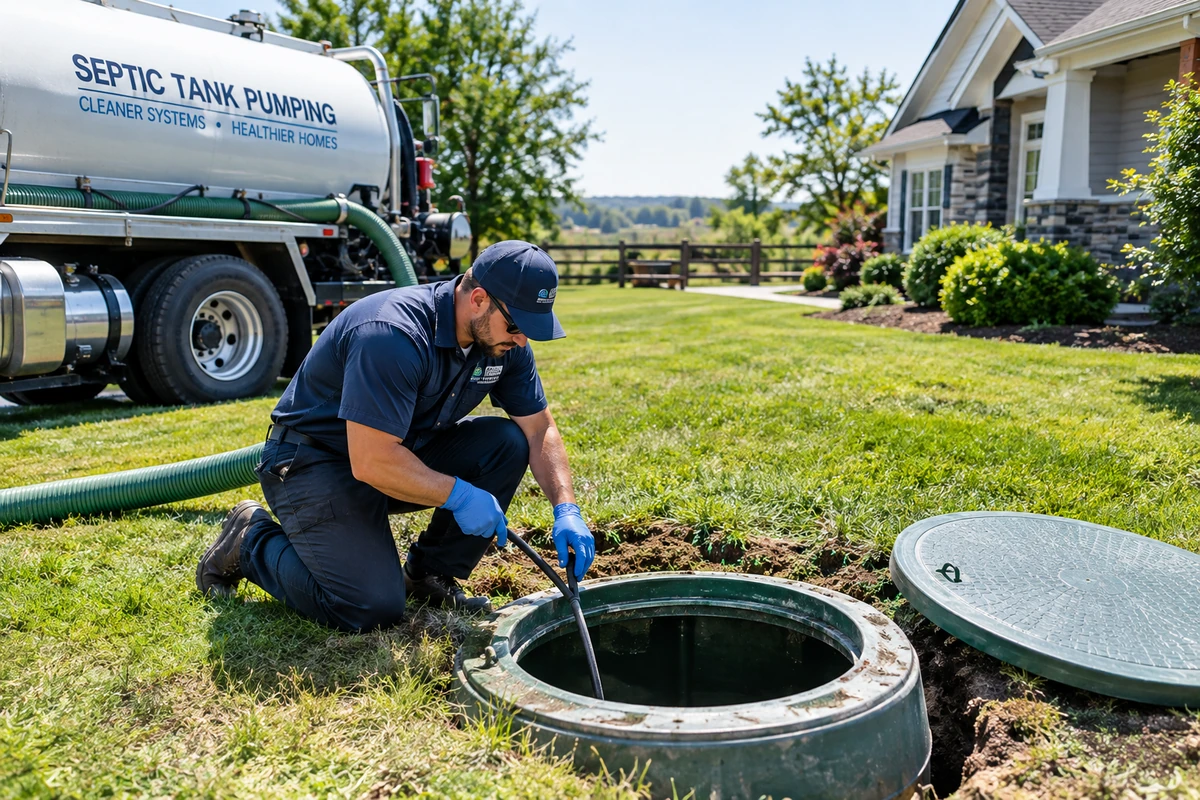
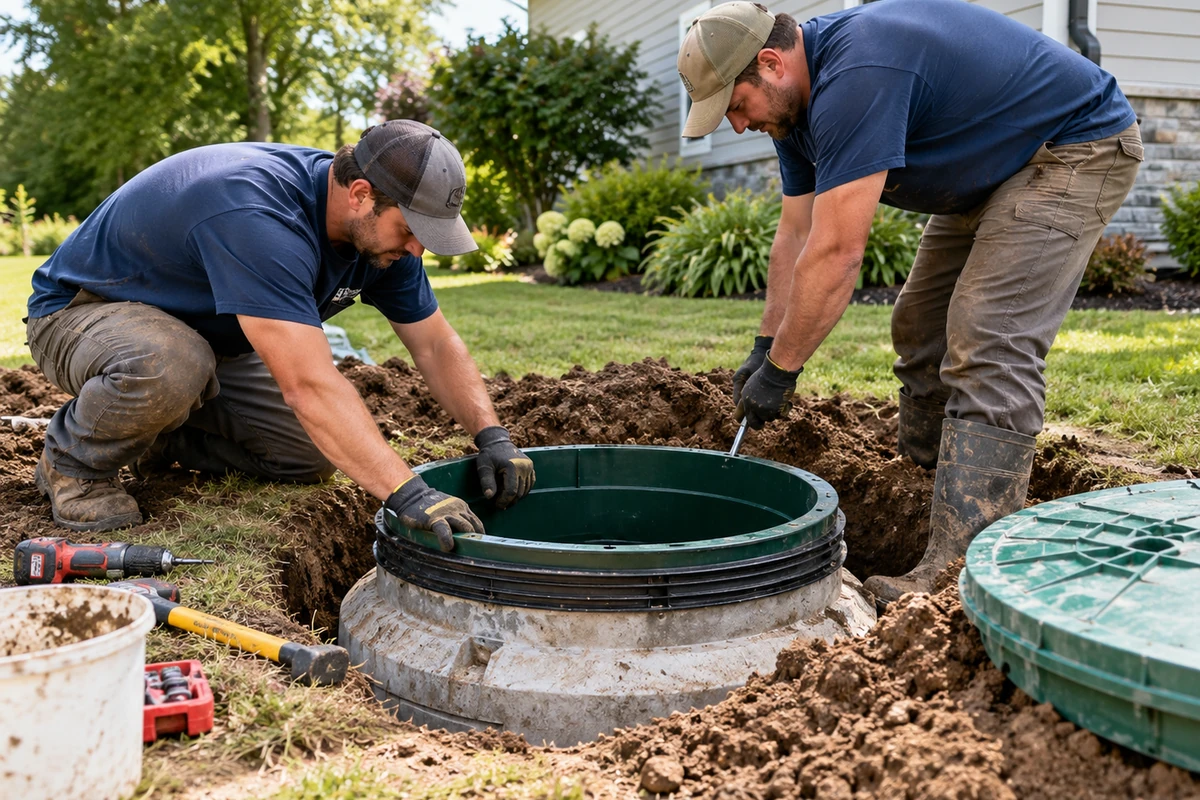
Tank location, access lids, risers and the condition of openings that can be reached safely.
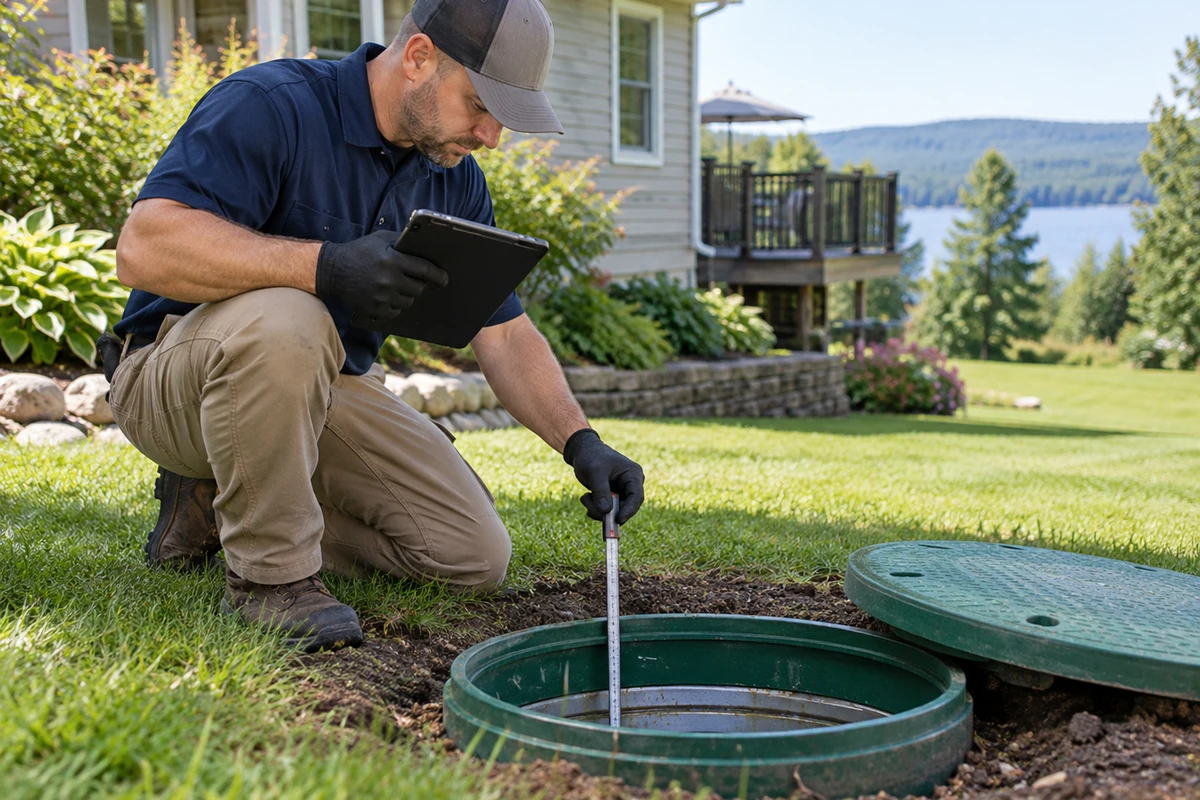
Liquid level plus sludge and scum measurements when access and scope allow reliable measurement.
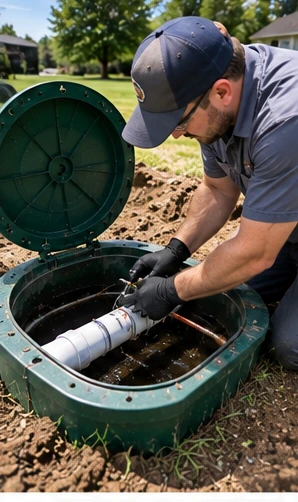
Visible condition of reachable inlet and outlet baffles, sanitary tees and an effluent filter when present.
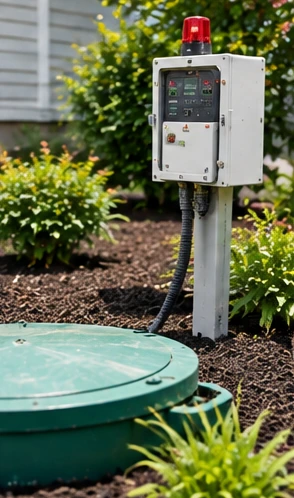
Observable operation of pumps, floats or alarms when included and safe to test.
Visible ground conditions around the tank, distribution area and drainfield, including wet areas or unusual growth.
Photographs, findings, limitations and practical recommendations in the service record or written report.
An inspection cannot expose every buried joint or predict exactly how long a drainfield will last. Weather, saturated soil, landscaping, inaccessible lids and current occupancy can limit what is visible or testable. We state those limits instead of treating an incomplete view as a guarantee.
When Should You Schedule a Septic Inspection?

Schedule an inspection when the maintenance history is unclear, a property is changing owners or the system shows symptoms that pumping alone may not explain. Earlier evaluation leaves more time to review records and separate routine service from repair work.
The last pumping or inspection date is unknown.
Several fixtures drain slowly, gurgle or back up together.
Sewage odor appears indoors, near the tank or around the drainfield.
A pump or high-water alarm activates.
Wet ground or unusually green growth appears over part of the system.
A buyer, seller or lender needs clearer information about an onsite system.
A recurring problem returns after pumping or line cleaning.
An alternative system is due for its required or manufacturer-directed maintenance review.
Similar symptoms can have different causes. Slow drains may result from a building drain or inlet-line restriction. High liquid can reflect outlet or drainfield trouble. An alarm can indicate a float, electrical or pump problem. The inspection narrows the possibilities, but additional cleaning, pumping, excavation or specialist testing may still be needed.
What Commonly Triggers a Septic Inspection?

Usage, system condition and site access all affect the need for inspection. A larger household can build solids faster. Leaking fixtures and concentrated laundry use can increase hydraulic load. Garbage-disposal use can add solids. Roots, damaged lids, deteriorated baffles, filter buildup and aging pumps can affect individual components.
Site conditions matter too. Deep access, unknown tank location, vehicle traffic over the system, recent construction and heavy rain can change what can be checked safely. A renovated property may still rely on older buried components. That is why records and actual observations are more useful than assumptions based only on a home's appearance.
Kentucky's onsite sewage program uses local health departments for site evaluations, permits and inspections related to system installation or alteration. The Kentucky Department for Public Health publishes the state program and applicable regulatory references.
How Our Septic Inspection Process Works
1. Define the Inspection Purpose
We establish whether the visit is for maintenance, a property transaction or diagnosis of a current symptom. That decision shapes the access, observations and report.
2. Review Records and Identify the System
Available permits, pumping history, prior repairs and system diagrams help establish the tank location, design and components. Missing records are documented rather than guessed.
3. Check Access and Observable Conditions
We inspect the accessible tank openings and visible site conditions. Measurements, component checks, pump testing, photographs or locating are performed only when included and appropriate for the system.
4. Explain Findings and Limits
We separate observed facts from possible causes. If blocked access, weather or buried components limit the inspection, the report states what could not be assessed and why.
5. Identify the Next Service
Findings may support routine pumping, filter maintenance, line inspection, tank repair, pump service or drainfield evaluation. Any additional work remains a separate scope.
6. Document the Visit
The final record identifies the inspection purpose, accessible areas, important observations and recommended next steps. Keeping the report with pumping and repair records creates a stronger maintenance history.
Inspection, Pumping and Diagnosis Are Different Services
An inspection records and evaluates conditions within the agreed scope. Pumping removes accumulated tank contents. Diagnosis follows a specific symptom to determine why the system is not working normally. These services can support one another, but one does not automatically replace the others. A tank may be due for pumping without showing a defect, and a recently pumped system can still have a blocked inlet, failed pump or drainfield problem.
Opening the tank during pumping can make some internal conditions easier to observe. However, a pumping visit does not become a complete property-transaction inspection unless the required records, field observations, photographs, testing and reporting are also included. We identify the purpose first so the visit produces the information the property owner actually needs.
How to Prepare for a Septic Inspection
Gather any system diagram, permit record, pumping receipt, maintenance contract and repair invoice available for the property. Note the age and type of the system if known. Describe alarms, odors, slow drains, backups or wet areas, including when each symptom appears. Keep vehicles, stored materials and pets away from the expected tank and drainfield area.
Do not open a septic tank yourself. Covers can be heavy or damaged, and an unsecured opening creates a serious fall and gas hazard. Avoid driving over buried system components or adding large volumes of water immediately before the visit unless a specific test requires normal water use. Clear records and safe access allow more inspection time to be spent on the system itself.
What Affects Septic Inspection Cost in Covington?
Inspection cost depends on system type, tank size, access depth, known or unknown location, number of components, report requirements, travel and the tests included. A visible tank with clear records usually requires less investigative work than a buried system with no diagram or maintenance history.
Pumping, excavation, locating, camera work, pump diagnosis and repair can add separate scopes. A property-transaction report may also require more documentation than a limited maintenance check. The price should identify what is included so two very different inspection scopes are not compared as if they were the same service.
Frequently Asked Questions
What is checked during a septic inspection?
The exact scope depends on the system and purpose. A useful inspection reviews available records, access, liquid and solids levels when measurable, tank condition, reachable components, pumping history, alarms or pumps when present and visible drainfield conditions.
Does a septic tank need to be pumped for inspection?
Sometimes. Pumping can improve access to internal conditions, but it is not automatically required for every limited inspection. The scope should state whether pumping is included, recommended or handled as a separate service.
Can an inspection guarantee that a drainfield will not fail?
No. An inspection reports conditions visible or testable at that time. Soil saturation, weather, access, occupancy and hidden components can limit what the inspector can conclude.
How much does a septic system inspection cost in Covington?
Cost depends on system size, access, depth, condition, travel, equipment, report requirements and any additional diagnosis. Pumping, locating, excavation, camera work or repair may be priced separately when they are outside the inspection scope.
Where is septic system inspection available?
Service coverage includes Covington, the listed Kenton County communities and nearby Northern Kentucky locations. The exact address, system type and required inspection scope determine availability.
Additional answers are available in Septic Service FAQs.