
For a conventional household system, EPA guidance generally recommends professional inspection at least every three years and pumping about every three to five years. Those are planning points, not fixed deadlines for every property. Tank size, occupancy, wastewater volume, solids, garbage-disposal use, and alternative components can shorten the interval.
Monthly Awareness
A monthly check does not require opening the tank or disturbing buried components. Notice whether several fixtures are draining slowly, toilets are gurgling, an alarm is active, or sewage odors appear. From a safe distance, look for unusual wetness, surfacing wastewater, or bright spongy growth over the tank or drainfield.
Inside: Note running toilets, leaks, multi-fixture slowing, gurgling, odors, and alarms.
Outside: Note ponding, wet soil, settlement, access damage, vehicle tracks, roots, or construction.
Record: Add the date, observation, rainfall, unusual water use, and action taken.
Annual Property Check
Once a year, compare the property with the system drawing or permit record if available. Confirm the approximate locations of the tank, access risers, distribution components, pump chamber, and drainfield. Make sure lids remain secured and visible access points have not been buried, damaged, or covered by landscaping. Do not remove a lid or enter a tank.
Review roof drains, sump discharge, grading, and irrigation. Clean water should not be directed onto the drainfield. Note new trees, sheds, patios, parking, or utility work that could affect the system. Check the past year of water bills or use patterns for unexplained increases that may indicate leaks.
Three Year Inspection Planning
Use three years as a general inspection planning point for a conventional household system unless the permit, prior report, or service professional sets a shorter interval. An inspection may review records, sludge and scum levels, tank condition, inlet and outlet components, an effluent filter, pumps and controls, distribution, and visible drainfield conditions.
A documented Septic System Inspection creates a condition record and helps determine whether pumping or repair is due. Alternative systems and systems with mechanical parts commonly need more frequent checks, often yearly. Confirm the exact schedule for the installed design.
Pumping Records
Do not schedule pumping by the calendar alone. Keep the date, tank size if confirmed, measured sludge and scum levels, volume removed, condition of accessible baffles or tees, filter service, noted defects, and recommendations. The next interval should reflect those findings and how the property is used.
A vacuum truck and pumping hose remove tank contents for lawful disposal. Pumping controls solids, but it does not repair a broken line, failed pump, leaking tank, or drainfield that cannot accept effluent. Keep the written service report with the property so the next technician can compare conditions instead of starting without history.
Water and Waste Habits
Every gallon sent down a drain enters the septic system. Repair leaks, use suitable load settings, run full laundry loads, and spread washing through the week. Avoid several high-water activities in one short period. Efficient fixtures reduce hydraulic stress but do not replace inspection or pumping.
Flush only human waste and toilet paper. Keep wipes, hygiene products, grease, oils, chemicals, and other trash out of the drains. Limit garbage-disposal use because food waste adds solids. Septic additives do not replace maintenance or repair.
Drainfield Protection
Keep vehicles, heavy equipment, structures, pavement, and storage off the drainfield and tank area. Weight can compact soil or damage buried piping. Maintain shallow grass or suitable ground cover. Keep trees and shrubs far enough away to protect the system, and ask a qualified professional when the correct distance is uncertain.
Direct roof, sump, and surface runoff away from the absorption area. After heavy rain, reduce unnecessary water use and watch for backups, alarms, surfacing wastewater, or wet field conditions. Do not dig or drive on saturated soil.
Pump and Alarm Checks
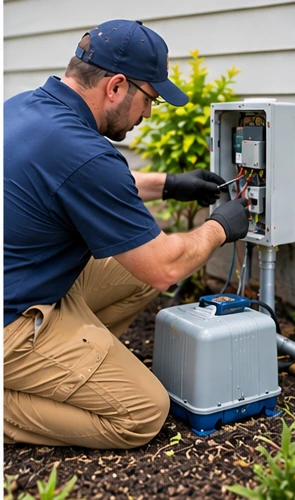
If the system has a pump, control panel, float switches, timer, or high-water alarm, follow the manufacturer and service instructions for observation and testing. Keep the panel accessible, dry, closed, and protected from damage. Never handle wiring or reach into a chamber. Qualified workers should assess electrical or mechanical problems.
Record every alarm date, recent water use, weather, breaker condition observed from a safe location, and service result. Silencing an alarm does not correct the cause. Reduce water use until the liquid level, pump, floats, controls, discharge line, and downstream area are checked.
Alternative System Contracts
Aerobic treatment units, pressure distribution, drip systems, sand filters, and other alternative designs can have added inspection, sampling, maintenance, reporting, or service-contract duties. Keep the permit, approved design, owner manual, component details, and current service agreement together. Follow the shortest interval required by the permit, local health authority, manufacturer, or service provider.
Do not apply a conventional gravity-system schedule to equipment with pumps, aerators, disinfection, or controls. Confirm who is responsible for each task, when it is due, what result must be recorded, and whether a certified installer or operator is required for the work.
Printable Maintenance Log
Print or copy this log into the property file. Use one row for each inspection, pumping visit, alarm, repair, filter service, or important observation. Attach the full invoice or report behind the matching entry.
| Date | Task or event | Finding or work completed | Next due |
Frequently Asked Questions
What records should stay with the property?
Keep permits, system drawings, service and pumping reports, repairs, inspection results, contracts and manufacturer information. Add alarm history, sludge and scum measurements, disposal documentation when supplied, and the next planned service date.
Can additives replace maintenance?
No. Additives do not replace inspection, pumping, water management or needed repair. Some products may be unnecessary or harmful, so use only guidance that applies to the installed system and local requirements.
What should I check after heavy rain?
Reduce unnecessary water use and look for backup, alarms, surfacing wastewater or unusually wet field conditions. Keep people, pets, and vehicles away from any affected area and do not open the tank.
Related Septic Resources
Septic Tank Pumping Covington KY - review pumping and routine tank-care guidance
Septic Service FAQs - find direct answers about common septic concerns
Areas We Serve Near Covington - view the local service-area overview